
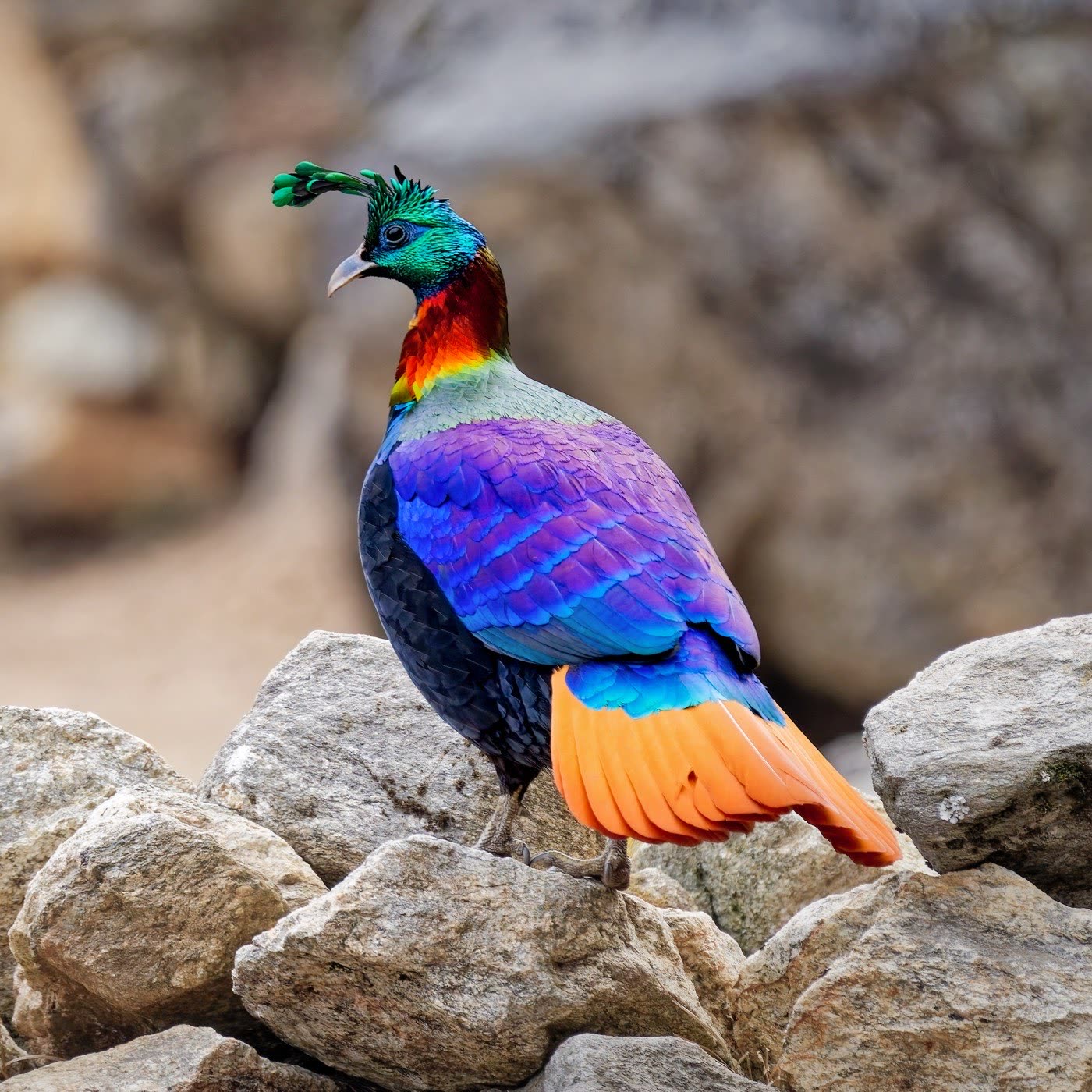
Hartola sits in the same belt of oak and rhododendron forest as Binsar Wildlife Sanctuary, some 30km away — one of Kumaon's richest birding grounds, with over 200 recorded species. You don't need to go looking; most mornings, the forest around the cottages does the work for you. Here are eight birds regularly seen and heard in these hills, roughly in the order you're likely to notice them — from the terrace railing to the forest canopy.
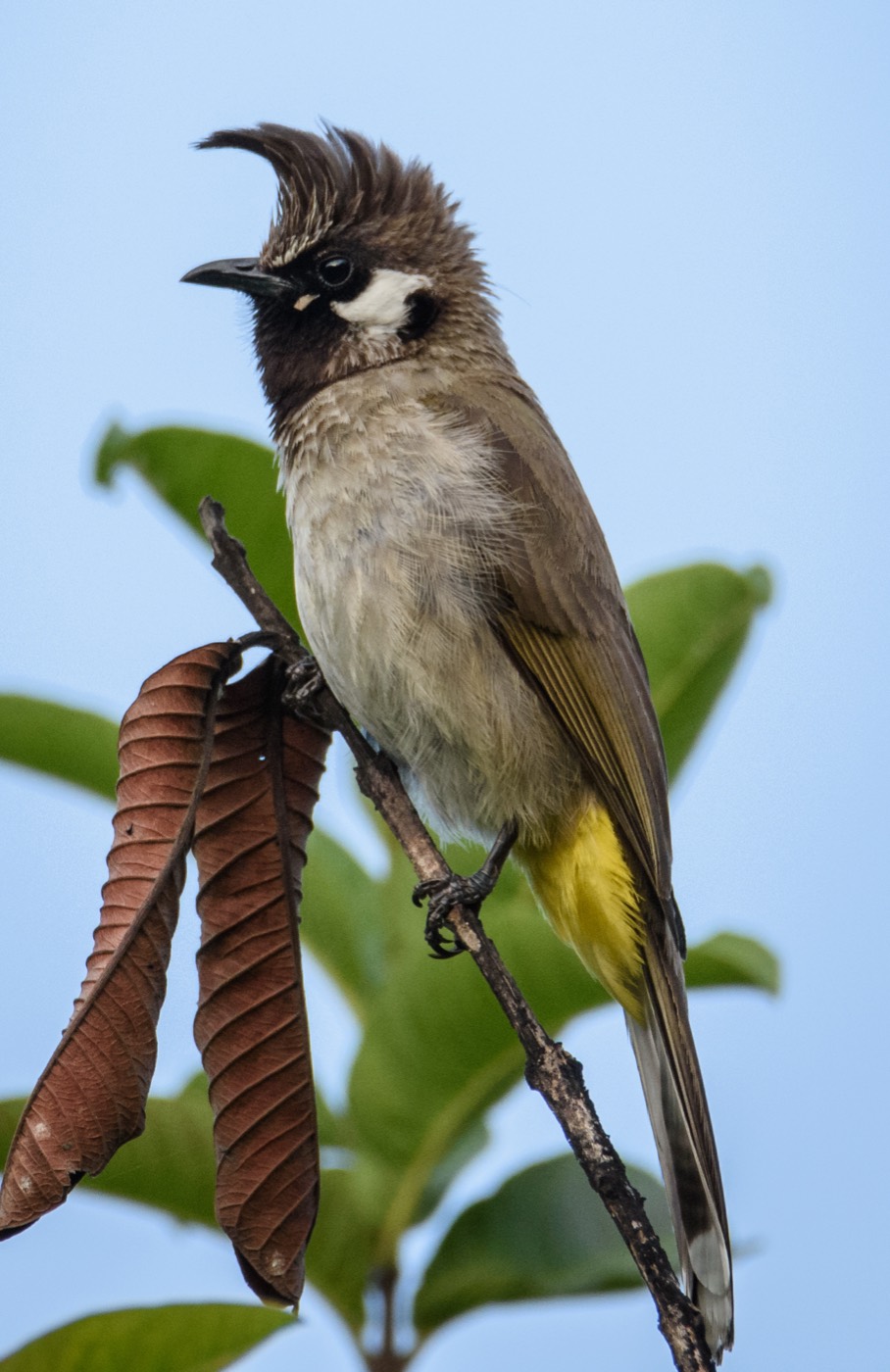
The bird you'll actually meet first — a cheerful, black-crested regular on balcony railings and garden shrubs right around the cottages. Look for the white cheek patch and the flash of yellow under the tail as it flits between branches.
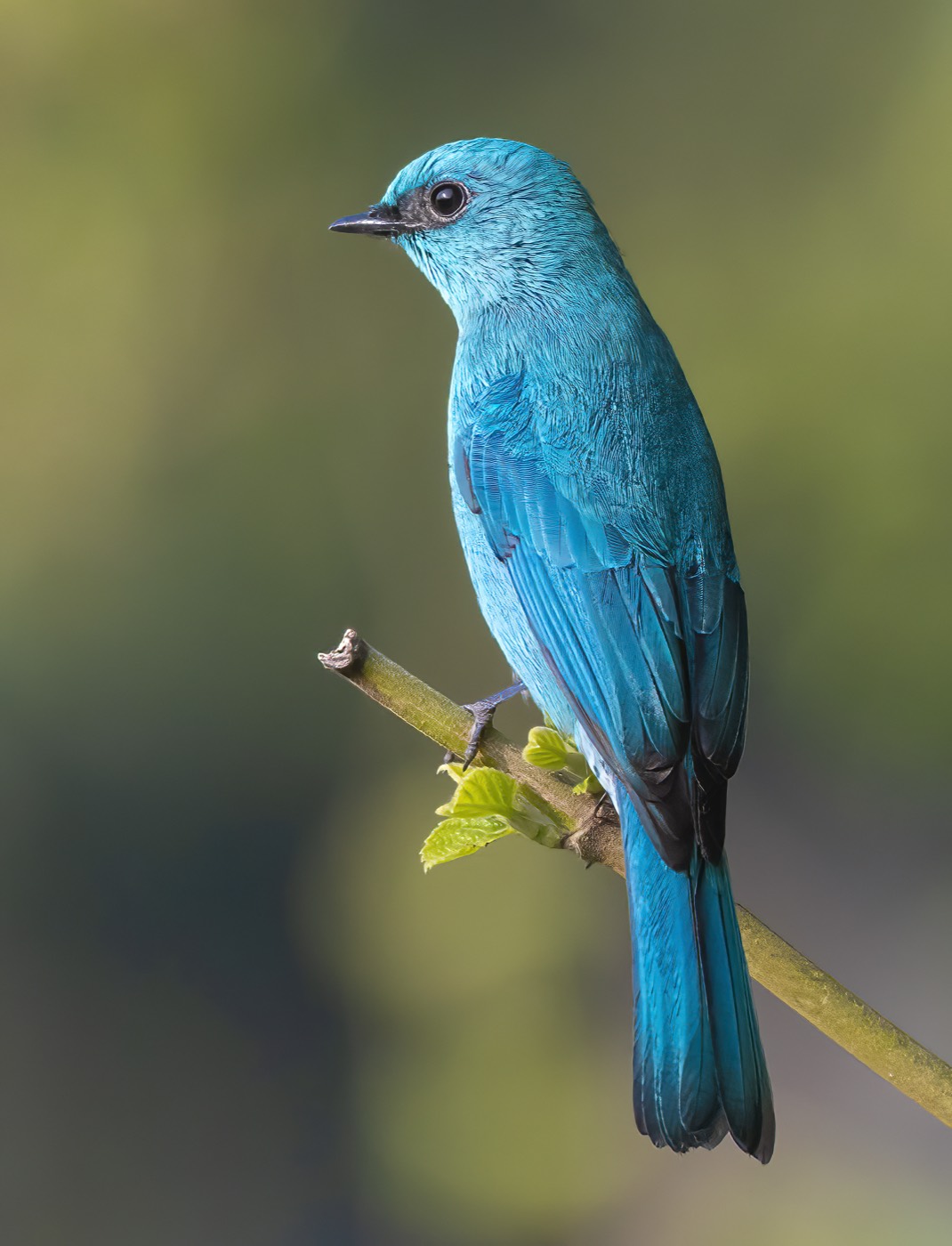
An almost unreal shade of copper-sulphate blue, usually spotted perched upright and alert on an open branch before darting out to snatch an insect mid-air. Common through the foothill forest edges around Hartola in the warmer months.
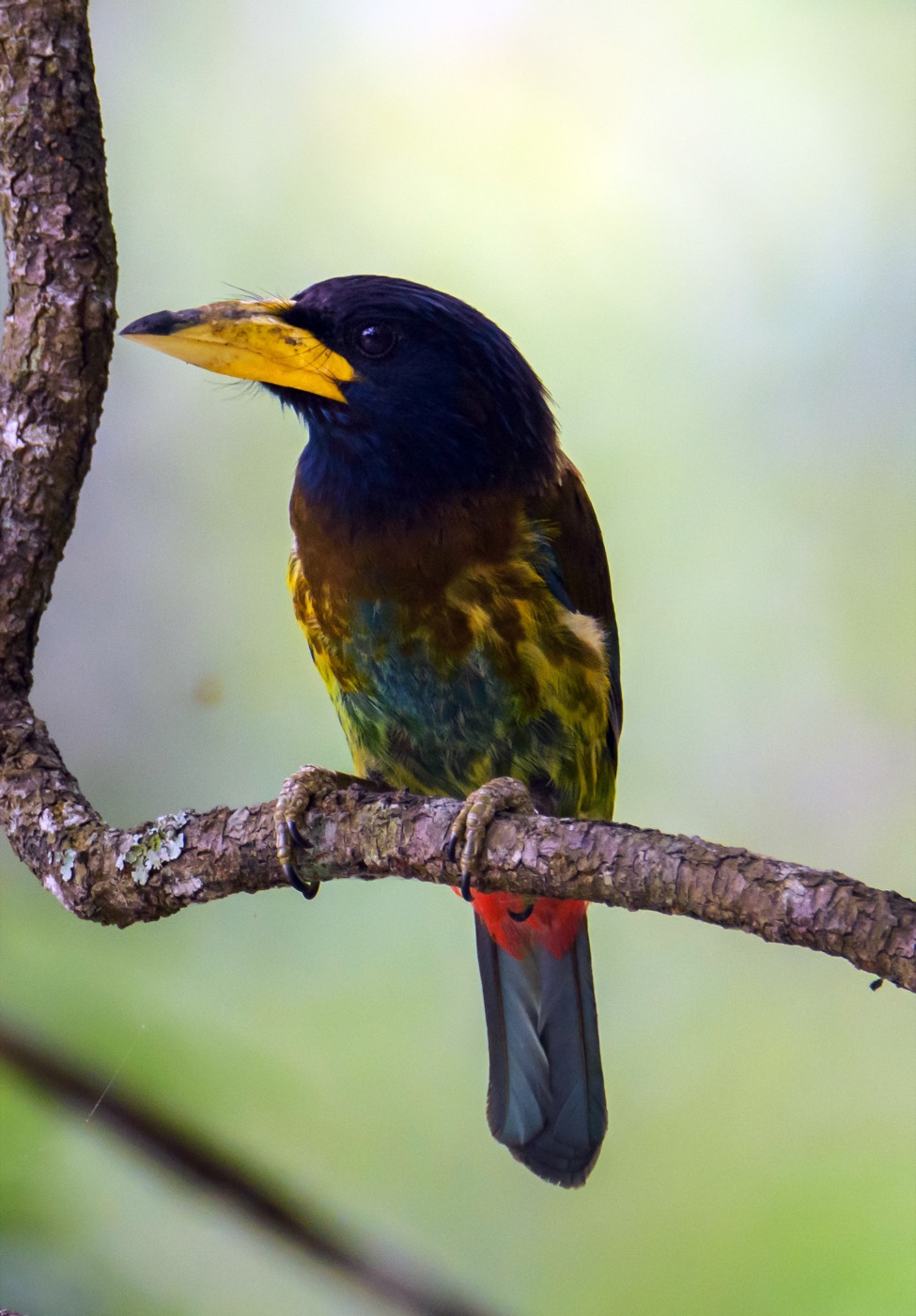
You'll hear this one long before you see it — a loud, monotonous "pee-oh, pee-oh" that carries through the canopy at dawn. A big, dark-headed bird with a heavy yellow bill, usually hidden high in the forest cover.
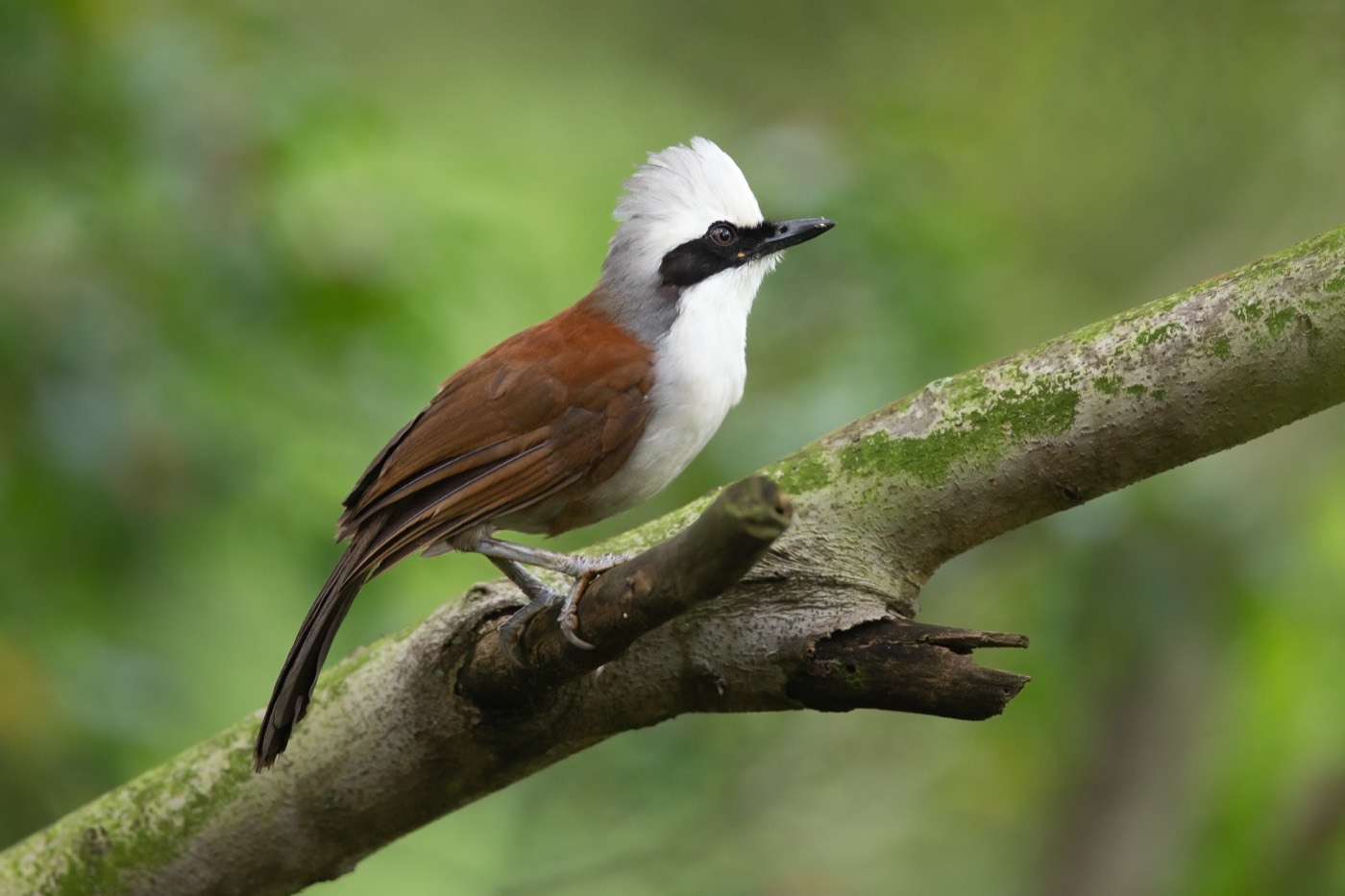
Travels in noisy, chattering little gangs through the undergrowth — its cackling, laughing call is one of the most recognisable sounds of the forest trails around the property. Unmistakable white crest and black eye-mask.
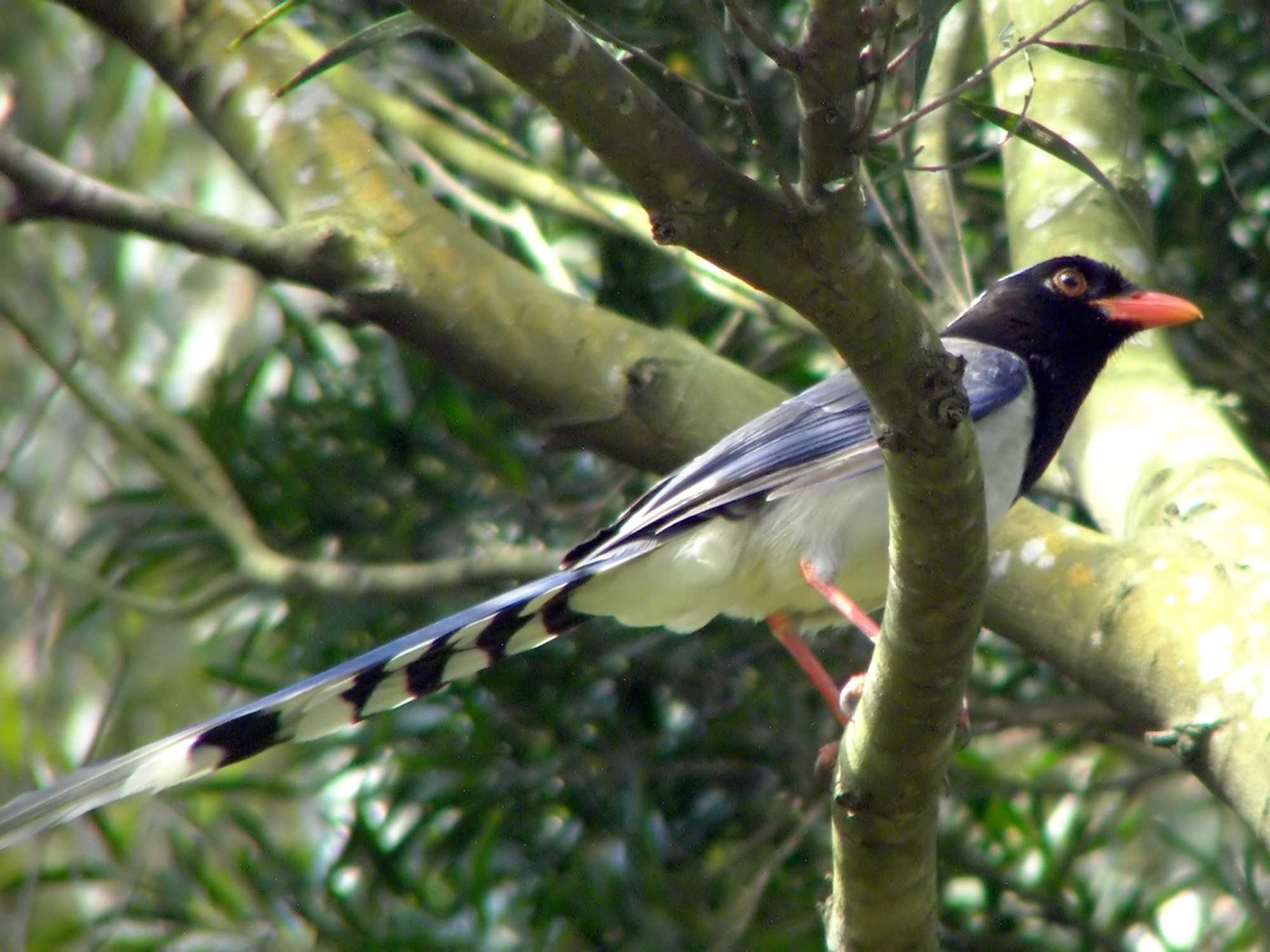
Hard to miss — a coral-red bill, black hood and a tail longer than its body, usually seen moving in small, loud, gossiping parties through the treetops. One of the more theatrical residents of the Kumaon forest.
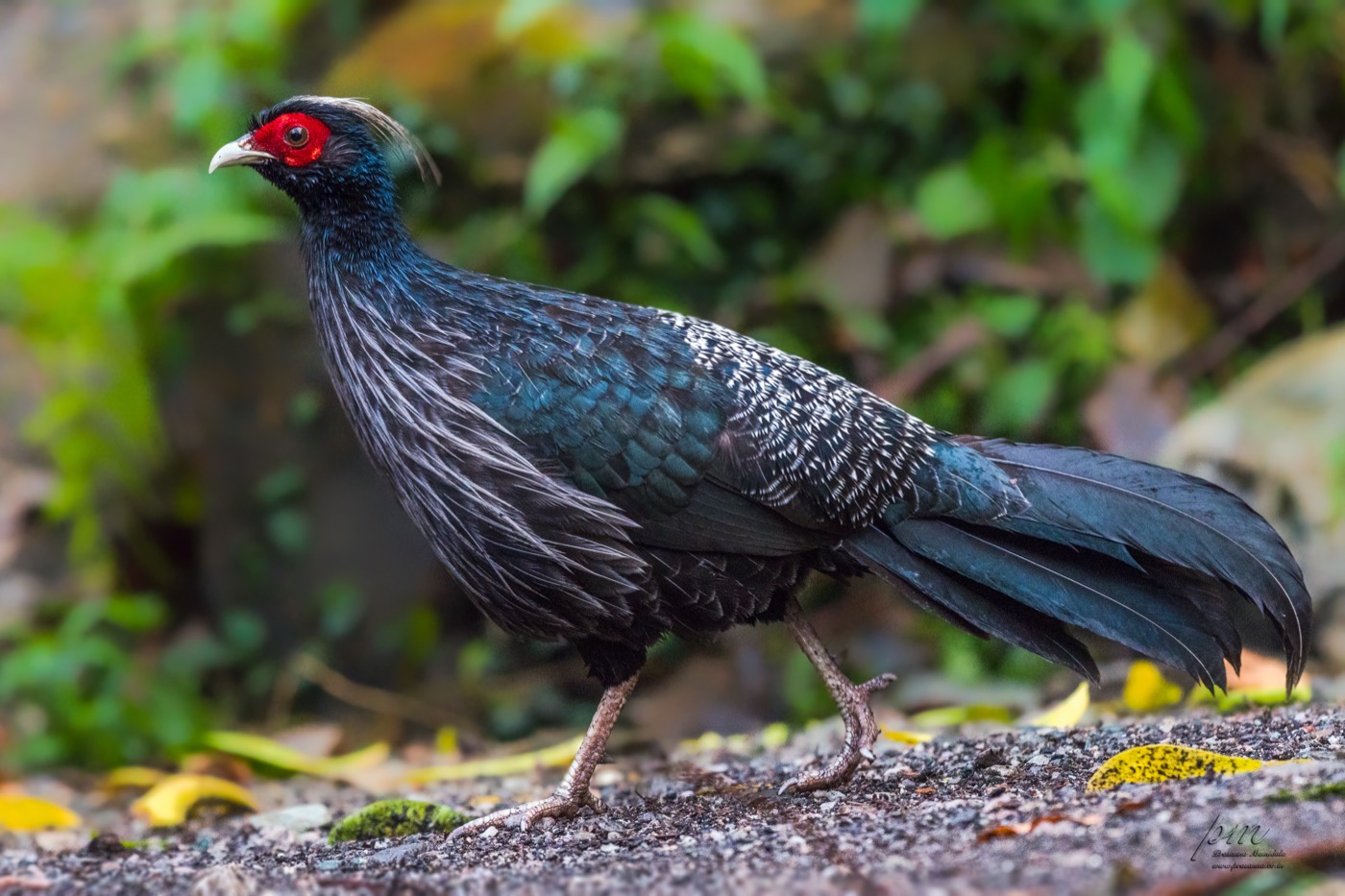
A shy, ground-dwelling regular of the forest floor, most often caught at dawn or dusk stepping out from the undergrowth near quiet trails. The male's glossy blue-black plumage and bare red face are unmistakable once seen.
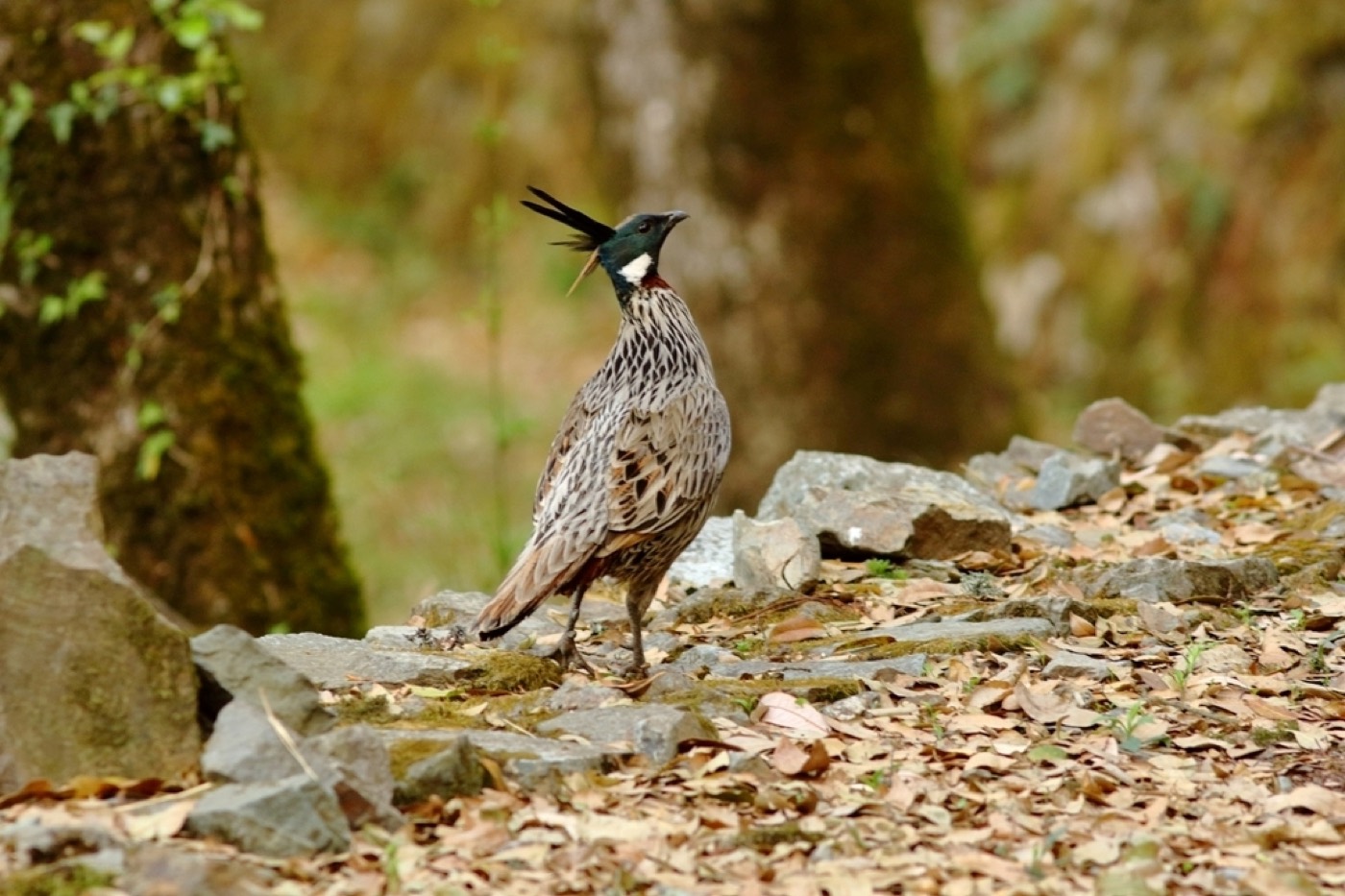
Far more often heard than seen — a sharp, crowing call echoing from dense oak cover at first light. Patient early risers on the forest trails around Hartola are sometimes rewarded with a glimpse of its crested, streaked form.
Uttarakhand's state bird, and the one every visiting birder hopes for — the male's plumage shifts between green, purple, copper and blue with every turn of the light, set off by a fanned, rust-orange tail. Higher-altitude oak and rhododendron slopes toward Binsar are the best chance of a sighting, particularly in spring.
Photographs via Wikimedia Commons — Pratap Gurung, Prasanna Mamidala, Asif N Khan, Charles Lam, JJ Harrison, Creepanta and Sanjoykumar99 (CC BY-SA / CC BY).